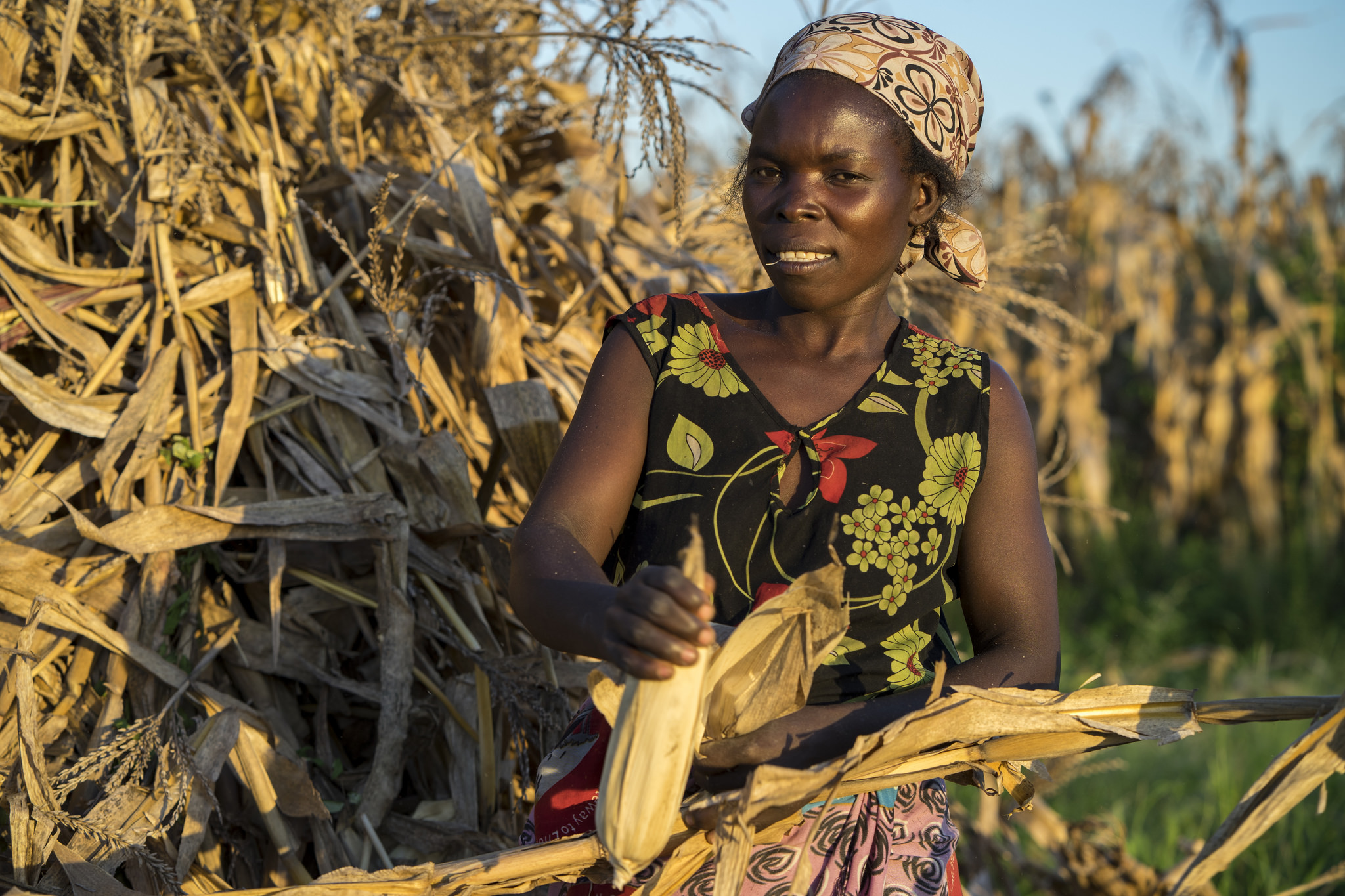
The United Nations declared 2021-2030 as the Decade on Ecosystem Restoration, highlighting a crucial period for addressing global environmental challenges. One of the key areas is combatting land degradation through innovative land restoration methods, including the diversification and sustainable intensification of cropping systems.
Rob Bertram, chief scientist at the United States Agency for International Development (USAID), underscored the need for a paradigm shift in African cropping systems. “The shift from extensification, which involves clearing more land (not sustainable), to sustainable intensification, where soil health is central, is essential for environmental sustainability and climate resilience,” he said.
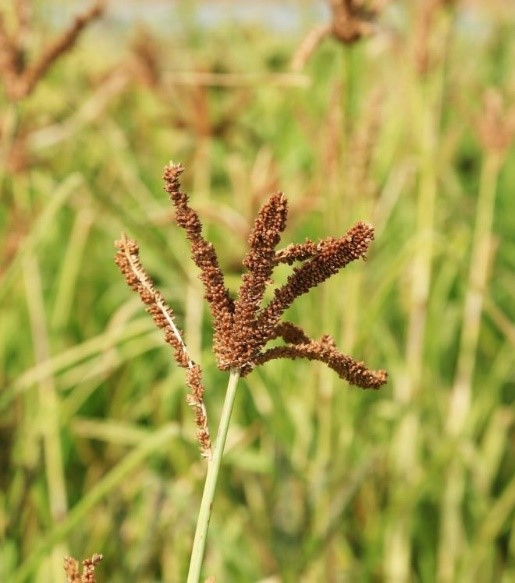
He spoke at the Vision for Adapted Crops and Soils (VACS) Quick Wins Seed Systems Project Inception Meeting, which focused on improved nutrition and diversity in the African cropping systems. The meeting, held in the ICRAF campus in Nairobi, Kenya, from 25-26 January 2024, brought together over 75 partners from six African countries: Kenya, Tanzania, Malawi, Zambia, Ghana, and Senegal. The participants discussed strategies for improving seed systems of targeted opportunity crops (pearl millet, finger millet, pigeon pea, cowpea, mung bean, and amaranth), especially the delivery of quality seeds of prioritized varieties.
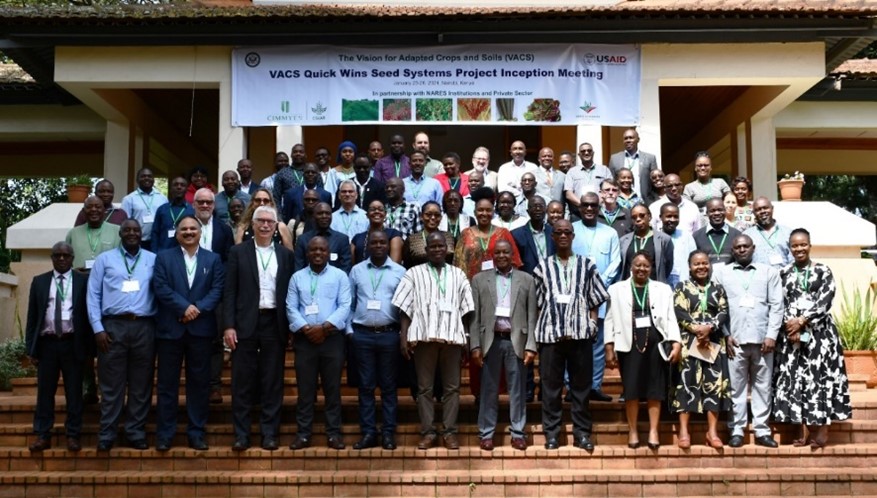
This innovative project exemplifies a comprehensive approach to transforming African food systems by integrating key elements, such as improved genetics, seed systems, value addition, gender and social inclusion, conducive seed policy environment, and the use of digital tools for crop advisory services and strengthening market linkages. Funded by the US Department of State and USAID, the VACS program aims at enhancing resilience, nutrition, and sustainability, focusing on opportunity crops that contribute to improved nutrition as well as soil health.
VACS will focus on six sub-Saharan African countries: Kenya, Tanzania, Senegal, Malawi, Zambia, and Ghana, to scale up the delivery, access, and adoption of climate-adaptive and nutritionally enriched varieties of pearl millet, finger millet, pigeon pea, cowpea, mung bean, and amaranth. Underscoring the commitment of CGIAR to the project, Ian Barker, CGIAR senior director for strategy, delivery and scaling, said, “We need to adopt a collaborative approach, recognizing the vital role of these crops in promoting nutrition and sustainability in Africa. CGIAR, together with partners, has made significant contributions in genetic improvement and in the release of improved varieties in several opportunity crops which can be effectively leveraged.”
Prasanna Boddupalli, VACS Quick Wins Seed Systems Project lead & CIMMYT’s Global Maize program director, stated that the initiative aims not only to address the challenge of strengthening seed systems for targeted opportunity crops, but also to lay the groundwork for African cropping systems that are sustainable, nutritious, and climate-resilient.
Rob Bertram emphasized the importance of this initiative. “We are at a critical juncture where the decisions we make today can ensure the future of Africa’s agrifood systems. Our emphasis on opportunity crops is not just about improving yields, but also about building resilience, enhancing nutrition, and bolstering climate resilience,” he added.
The project aims to improve smallholders’ access to high-quality seeds of opportunity crops and strengthen connections to markets and farm services. Speaking on these goals, Bram Govaerts, director general of CIMMYT, highlighted the importance of being innovative in our work and embracing partnerships, leveraging our knowledge, and developing functional seed systems. “Our innovation strategy is designed to respect and incorporate traditional agricultural practices, and one key component of this is ensuring seed affordability and accessibility through partnerships. These partnerships are enriched by a diversity of partners, each bringing unique insights and expertise.” He also emphasized that by leveraging our knowledge and technologies, we can establish functional seed systems for the opportunity crops, while adhering to the Think-Innovate-Plan (TIP) methodology.
CIMMYT is committed to meeting the changing needs of African agriculture by focusing on research and expanding its impact through the implementation of dryland crops. This innovative approach is based on CIMMYT’s forward-thinking 2030 strategy, which has the potential to transform agriculture by promoting climate resilience, sustainable and inclusive agricultural development, and ensuring food and nutrition security.
The VACS Quick Wins Seed Systems Project will be jointly implemented by CIMMYT and Seed Systems Group (SSG). Joe DeVries, president of SSG, highlighted the importance of public-private-producer collaboration in addressing the challenge of strengthening seed delivery systems for opportunity crops, including small seed packs (for stimulating demand), and effectively engaging village-based advisors (VBAs). “It’s essential to create a functional seed system where breeding, certified seed production, farmer awareness, and input supply work in harmony,” he said.
Jean-Claude Rubyogo, bean programme leader and director of the Pan Africa Bean Research Alliance (PABRA) shared PABRA’s innovative approach to the bean seed supply challenge, which involved among other strategies, using market traders as seed suppliers. He elaborated on the impact of the approach and highlighted the importance of starting with certified seeds to establish a solid foundation from the outset.
The workshop also discussed novel approaches to overcoming various challenges in the seed systems of opportunity crops. Boddupalli highlighted the “seed village concept,” which was first implemented in India and involves entire villages producing and commercializing specific varieties, as a potential game changer. If replicated in Africa, this concept has the potential to significantly increase profitability for seed farmers while also ensuring a long-term supply of improved varieties.
Another focus was on digital innovation, with Jacques Smit, regional partnerships manager at Viamo, showcasing how mobile phones and digital campaigns can be effectively used to raise awareness about improved crop varieties and crop advisory services, drawing on from the work being implemented under the AID-I MasAgro Africa project in southern Africa. “The high penetration of mobile phones in Africa offers a unique avenue for engagement with farming communities and information dissemination,” he said.
Policy also took center stage in the discussions. Paswel Marenya, socioeconomist at CIMMYT, discussed the need to balance investments on major crops and opportunity crops and advocated for data-driven analytics to influence behavioral changes in consumption and nutrition, and favorable policy outcomes.
Boddupalli underscored the significance of incorporating diversity and inclusivity into the project implementation, terming the meeting as “a melting pot of ideas and knowledge.” He reiterated the need to translate this collective knowledge into action and emphasized the importance of ensuring the inclusion of gender perspectives and the active participation of youth in the project.
“This is just the beginning of a journey that promises to bring about tangible change in the lives of African farmers and consumers alike,” concluded Rob Bertram.
 Capacity development