Gender equality, youth and social inclusion
Gender and other social differences such as age, wealth and ethnicity, have an enormous influence upon the success of agricultural interventions. To ensure equitable impacts and benefits to rural people, CIMMYT emphasizes inclusive research and development interventions. Starting with the collection of data on gender and social differences, efforts are underway to address these gaps and ensure equitable adoption of technologies and practice. This includes working towards gender-equitable control of productive assets and resources; technologies that reduce women’s labor; and improved capacity of women and youth to participate in decision-making.
SUPER WOMAN: Suchismita Mondal develops climate change resilient wheat
 Climate adaptation and mitigation
Suchismita Mondal was inspired by the humble flour tortilla to take up a career as an international wheat breeder.
SUPER WOMAN: Dolores Robles González spurs farmers to adopt conservation agriculture
Gender equality, youth and social inclusion
SUPER WOMAN: Diane Holdorf promotes sustainability to support smallholders
Gender equality, youth and social inclusion
SUPER WOMAN: Jessica Rutkoski conquers math demons, finds success as wheat breeder
Gender equality, youth and social inclusion
In high school, Jessica Rutkoski was similar to many girls who suffer from the tedium and complexity of high school arithmetic – she avoided it.
SUPER WOMAN: Julieta Salazar boosts nutritional profile of maize in Guatemala
Gender equality, youth and social inclusion
Seeds for needs in Malawi
Climate adaptation and mitigation
The United States Agency for International Development (USAID) and the Government of Malawi launched five projects on food security, fisheries and environment.
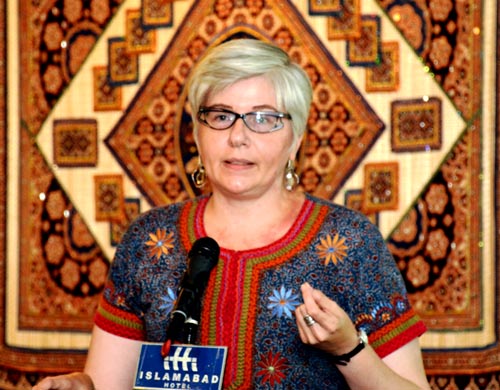
CIMMYT remembers vital legacy of gender specialist Paula Kantor
Gender equality, youth and social inclusion
CIMMYT is sad to announce the tragic death of our friend and respected colleague, gender and development specialist Paula Kantor.
“First Lady of Wheat” in Mexico to celebrate her father, Norman Borlaug
Gender equality, youth and social inclusion
The late wheat breeder Norman Borlaug was so dedicated to his work that he was away from home 80 percent of the time, either travelling or in the field, recalls his daughter, Jeanie Borlaug Laube.
Maize and wheat global gender study: coding large-scale data to reveal the drivers of agricultural innovation
Capacity development
Over the last week, MAIZE and WHEAT CRP investigators from the global cross-CRP study on gender in agricultural innovation met at El Batán from 26 Feb to 1 March to take stock of progress so far and plan the next steps in the implementation of this unique research initiative.
CGIAR gender specialists talk International Women’s Day
Gender equality, youth and social inclusion
CGIAR gender specialists met at CIMMYT El Batán last week, 26 February – 1 March, to discuss the next steps in the global comparative field study of gender norms, agency and agricultural innovation. This team of principal investigators from MAIZE and WHEAT will conduct more than 70 cases globally by the close of 2015.
Men’s roles and attitudes are key to gender progress, says CIMMYT gender specialist
Gender equality, youth and social inclusion
Gender research and outreach should engage men more effectively, according to Paula Kantor, CIMMYT gender and development specialist who is leading an ambitious new project to empower and improve the livelihoods of women, men and youth in wheat-based systems of Afghanistan, Ethiopia and Pakistan.
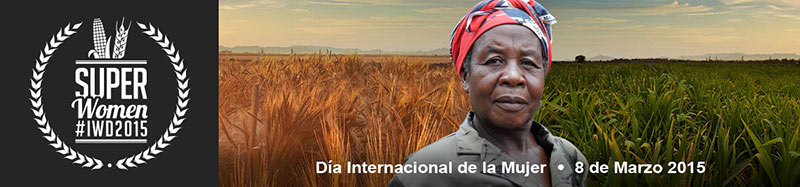
Maize and wheat Super Women campaign highlights diversity
Gender equality, youth and social inclusion
A social media campaign initiated to celebrate the achievements of women has led to more than a dozen published blog story contributions about women in the maize and wheat sectors.
Opportunity: integrating gender in crop research today!
Gender equality, youth and social inclusion
CIMMYT Gender Specialist Lone Badstue attended a CGIAR Gender Network meeting in the Philippines during 19-23 January. Participants discussed CGIAR’s progress and results in gender research, along with plans for collective, cross-program activities that contribute to CGIAR innovation.
Gender matters in farm power
Gender equality, youth and social inclusion
The goals of the Farm Power and Conservation Agriculture for Sustainable Intensification (FACASI) project are to address the issues of declining farm power in eastern and southern Africa, and to reduce the labor burden that comes with low farm mechanization, by promoting small-scale mechanization based on two-wheel tractors.
CIMMYT recognizes the International Day of Rural Women
Gender equality, youth and social inclusion
15 October 2014 will mark the sixth celebration of the International Day of Rural Women, a United Nations (UN) day dedicated to recognizing “the critical role and contribution of rural women, including indigenous women, in enhancing agricultural and rural development, improving food security and eradicating rural poverty.”