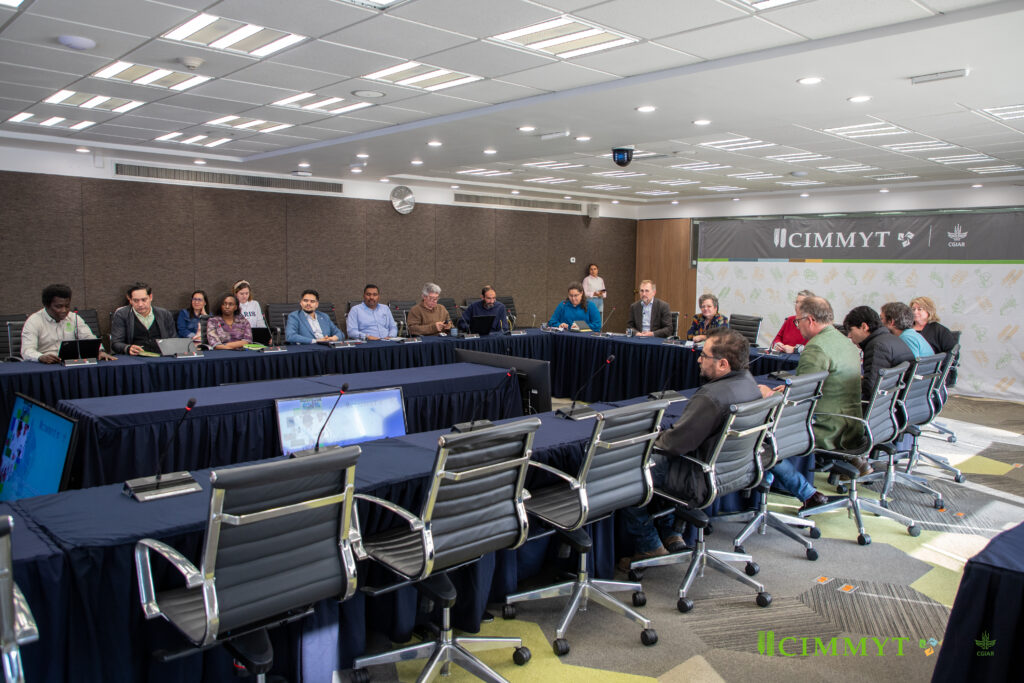
On December 10, CIMMYT headquarters hosted the launch of the 2025 EAT-Lancet Commission Report on Healthy, Sustainable, and Just Food Systems, the most comprehensive global scientific assessment to date on the role of food systems in human health, climate stability, social equity, and planetary boundaries.
The event brought together CIMMYT leadership, researchers, and strategic partners to discuss the urgency, and feasibility, of transforming global food systems. The EAT-Lancet Commission is a multidisciplinary scientific platform convening leading experts in nutrition, agriculture, public health, climate science, economics, and social sciences to define evidence-based pathways for feeding a growing global population while remaining within Earth’s ecological limits.
The 2025 report builds on the Commission’s influential 2019 publication and incorporates new datasets, advanced modeling, and global scenario analysis. Together, these approaches demonstrate that food systems transformation is central to achieving improved health outcomes, climate resilience, environmental sustainability, and social justice.
Among the key findings presented during the launch, the report shows that a global shift toward healthier diets could prevent up to 15 million premature deaths per year. It also highlights that food systems are currently the largest contributor to the transgression of five planetary boundaries, including climate change, biodiversity loss, land use, freshwater use, and nutrient cycles. Even with a complete global transition away from fossil fuels, food systems alone could still push global warming beyond the 1.5°C limit set by the Paris Agreement.
The analysis further reveals stark global inequities. Less than 1% of the world’s population currently lives within what the Commission defines as a “safe and just space,” where people’s rights and food needs are met within planetary limits. At the same time, the wealthiest 30% of the global population account for more than 70% of food-related environmental impacts, while nearly one-third of food systems workers worldwide earn below a living wage.
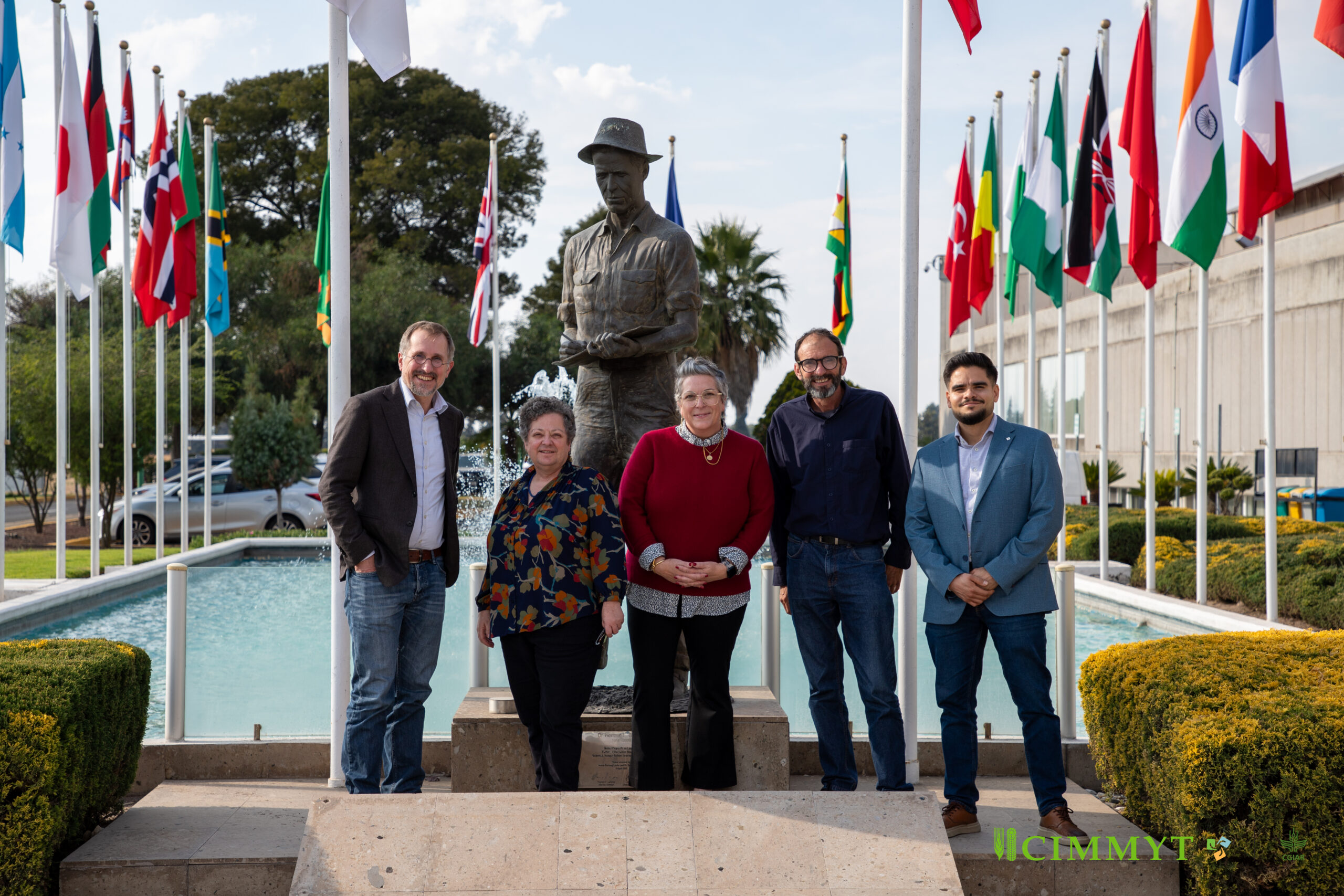
The event was featured a distinguished presidium, composed of:
Daniela Vega, Chief of Staff to the Director General, CIMMYT
Dr. Fabrice DeClerck, Chief Science Officer at EAT and Principal Scientist at the Alliance of Bioversity International and CIAT (CGIAR)
Hon. Sharon Burke, Chief Engagement Officer
Dr. Sieg Snapp, Sustainable Agrifood Systems Program Director, CIMMYT
Dr. Santiago López Ridaura, Principal Scientist, Agricultural Systems and Climate Change Adaptation, CIMMYT
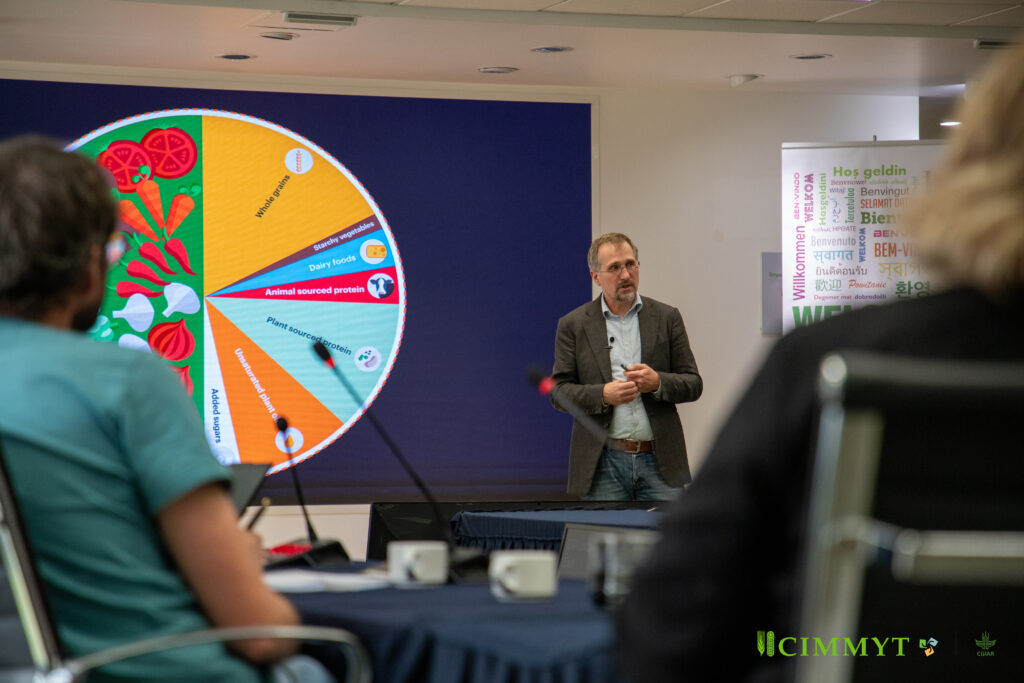
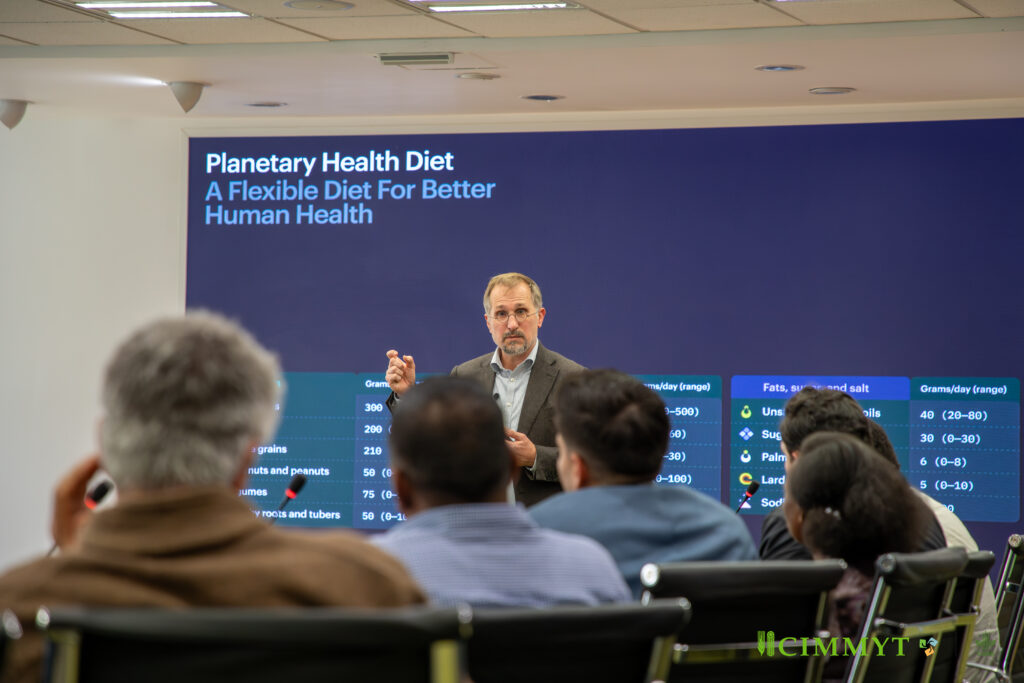
The main scientific presentation was delivered by Dr. Fabrice DeClerck, who outlined the report’s scientific foundations and emphasized that food systems transformation is not only urgent, but achievable. The report identifies eight key solutions, including shifts toward healthy diets, reductions in food loss and waste, adoption of sustainable production practices, protection of intact ecosystems, securing decent work, and ensuring meaningful inclusion of marginalized groups in food systems decision-making.
Hosting the launch reaffirmed CIMMYT’s commitment to advancing science-based solutions that integrate nutrition, climate resilience, and social justice, in alignment with the organization’s 2030 Strategy and global sustainable development goals.
 Capacity development