Wheat, one of Ethiopia’s most strategic crops, places the country among the largest producers in Sub-Saharan Africa. Yet, this vital sub-sector faces mounting challenges from climate variability-shifting seasons, erratic rainfall, and prolonged dry spells. With the increasing frequency of mid-season droughts, shortened growing periods, and heat stress events, Ethiopia’s wheat is projected to face to yield losses of up to 40%.
In response, CIMMYT has been implementing two initiative projects in collaboration with the Ministry of Agriculture (MoA) with support from the Global Center on Adaptation (GCA). The first initiative, which concluded in 2024 was aligned with the Food Systems Resilience Program (FSRP), one of the major national programs implemented by the MoA in partnership with several development organizations. The program aims to enhance agricultural productivity while addressing both current and future climate risks affecting key agricultural value chains in Ethiopia.
Among these value chains, wheat has been identified as a priority crop due to its high sensitivity to climate variability. To address this challenge, CIMMYT collaborated with the program through the GCA-supported Digital Climate Advisory Services (DCAS) for Priority Agricultural Value Chains in Ethiopia project. This initiative was focused on analyzing climate risks and generating evidence-based recommendations to strengthen resilience. As part of the project, digital climate advisory services were piloted in selected areas in partnership with a local start-up private digital company.
Following the successful implementation of this project, and with additional support from GCA, CIMMYT is also providing technical support to the Climate Resilient Wheat Value Chain Development (CREW) project, another broad MoA initiative funded by the African Development Bank (AfDB), operating in Arsi Zone. The technical support focuses on aligning farmers’ needs with services offered by private sector actors in order to recommend relevant and feasible digital adaptation options. Digital agroclimatic advisories are also further tailored to suitable delivery methods that correspond to each group’s access to information and technology. The services are also linked with appropriate service providers—public, private, and community-based—to ensure effective implementation and sustained support for farmers’ climate adaptation efforts.
Empowering farmers through Digital Climate Advisory Services
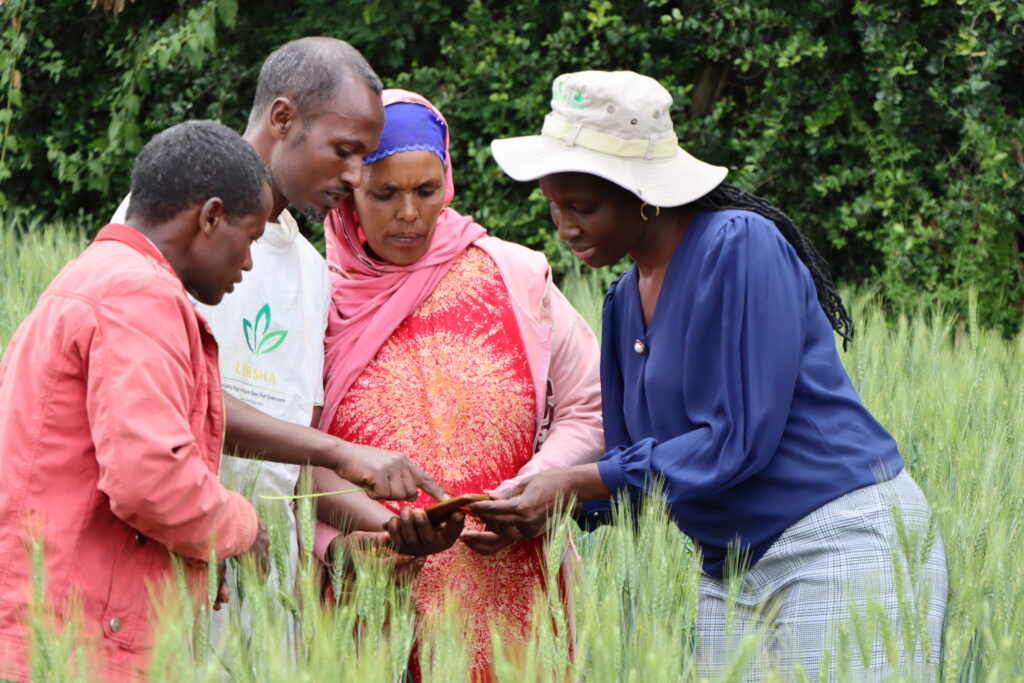
At the heart of the FSRP and CREW initiative is the Digital Climate Advisory Services (DCAS) system—an innovative approach that delivers relevant, localized, real-time, and data-driven advisories directly to farmers.
In partnership with GCA, CIMMYT began by identifying key climate risks and mapping adaptation options across different agroecological zones and piloting digital agroclimatic advisory services. The resulting digital advisories provide farmers with actionable information on weather patterns, agronomic practices, and adaptive management, helping them make informed, climate-smart decisions—from planting and soil preparation to pest control and harvesting.
Through this initiative:
- 2,470 smallholder farmers (26% women) now receive localized climate information in their native languages.
- 190 government development agents and 65 LERSHA field agents have been trained to deliver digital advisories to local communities.
- Farmers are now better prepared to anticipate and respond to climate-related risks, enhancing productivity and resilience.
Bridging science, policy, and practice
According to Dr. Mercy Nyambura, Senior Program Officer for Food Security and & Rural Well-being at GCA, “wWhat we are doing with CIMMYT, and local partners is bridging science and practice, providing technical assistance, influencing policy, and ensuring farmers understand and adapt to climate change.”
Beyond field-level impact, the initiative contributes to national and regional adaptation policies, aligning with broader programs funded by the African Development Bank (AfDB) and the World Bank under the Africa Adaptation Acceleration Program (AAAP).
Four pillars of impact
The Digital Climate Advisory Services initiative rests on four interconnected pillars that together create systemic change in Ethiopia’s wheat value chain:
- Technical Assistance: Strengthens local capacity through adaptation planning, value chain assessments, and practical training for extension officers—turning them into local champions of resilience who bridge research and on-the-ground action.
- Climate Services: Provides real-time, actionable information on rainfall timing, temperature shifts, and planting windows, helping farmers plan, manage risk, and make informed choices that protect their yields.
- Policy Engagement: Ensures field-based insights inform agricultural and climate policies, translating evidence into investment strategies that mainstream adaptation at scale.
- Holistic Adaptation: Integrates improved agronomic practices, soil and water management, and better nutrition outcomes, building outcomes, not just resilience, but also long-term food security and livelihoods.
From knowledge to action: Results on the ground
The DCAS initiative is already demonstrating tangible impact:
- Policy influence: Evidence from the field is informing Ethiopia’s national frameworks for climate-smart agricultural advisories, helping design data-driven systems that reach more farmers.
- Knowledge transfer: Lessons learned are informing other adaptation programs such as AfDB’s Wheat Project and broader food security initiatives across Africa—promoting cross-learning and innovation.
- Sustained partnerships: Collaborations with private actors like LERSHA ensure that digital advisories continue beyond the project’s timeline, fostering a self-sustaining ecosystem where digital tools, extension services, and farmer networks reinforce each other.
- Climate financing leverage: The success of DCAS provides a strong case for scaling investment in digital climate services, helping attract funding from national and international partners to secure long-term resilience.
Stories of change
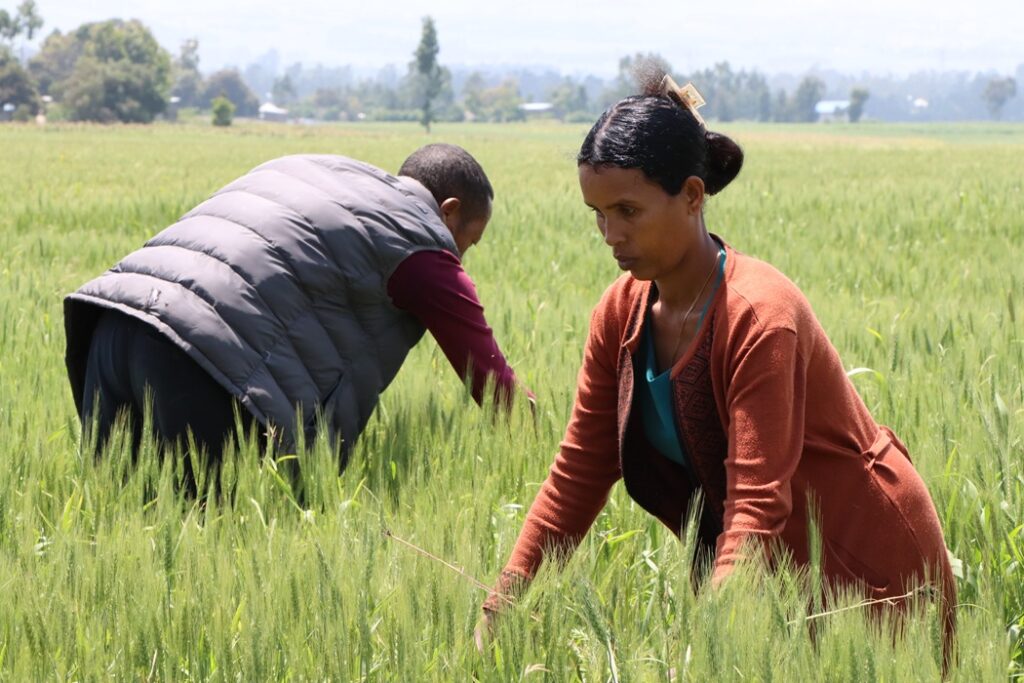
In the village of Ada and Gora, early morning sunlight glows across the green fields where Hawa Abdeal, and Tadesse Tefesaa work hard. Like many smallholder farmers, unpredictable weather once left them uncertain about when to plant or harvest. But through Digital Climate Advisory Services (DCAS), things have begun to change.
Hawa, checking her phone for the daily weather update, smiles.
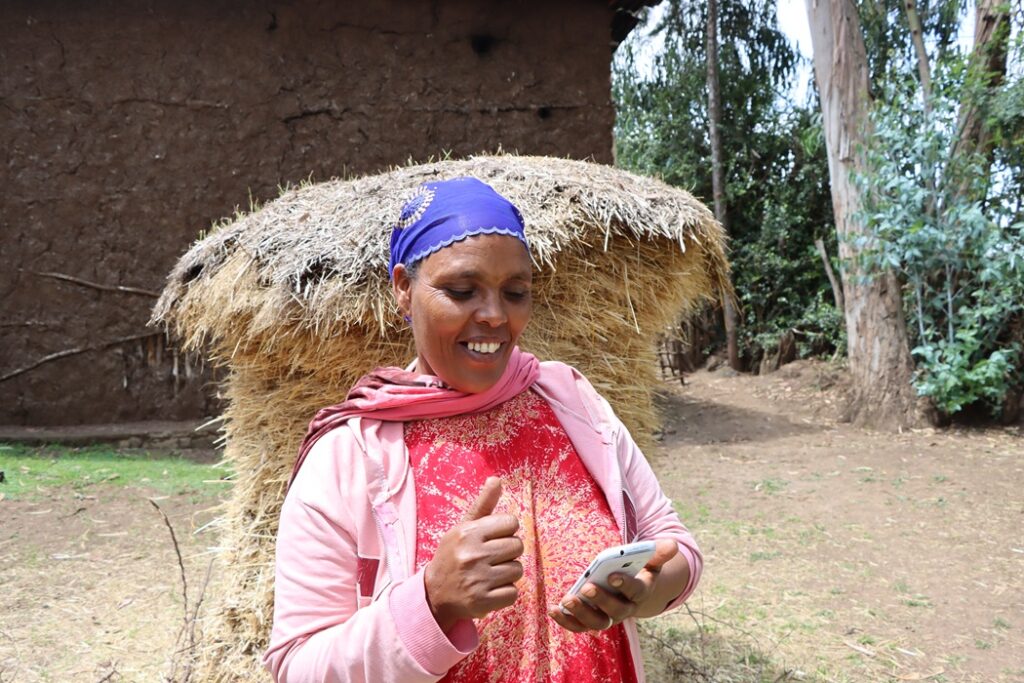
“Before, I used to guess when the rains would start. Now, DCAS sends me the forecast directly to my phone. I can plan my planting better and save seeds and fertilizer.”
Tadesse, a veteran wheat farmer, adds:
“With the information we receive, I know the best time to plant, harvest and store my wheat. My yield has increased and so has my income. DCAS is like having an advisor in my pocket.”
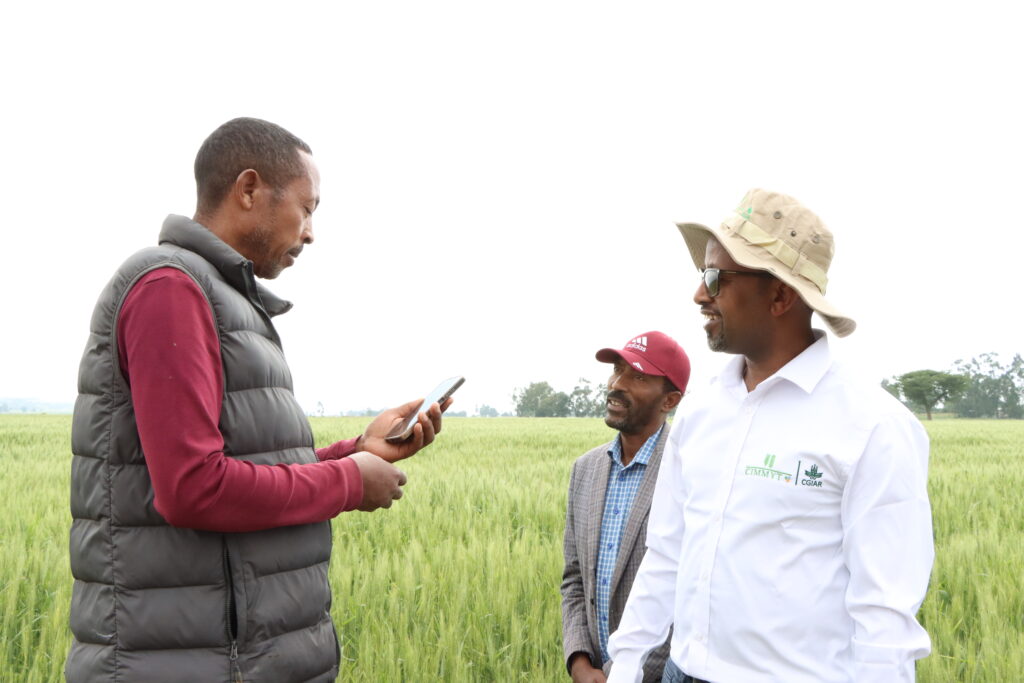
These stories illustrate how digital innovation is empowering farmers with knowledge, confidence, and greater climate resilience.
“It’s rewarding to see the impact of our support in the field. Every behavior and decision makes sense when people have access to the right information,” says Dr. Tesfaye Shiferaw, System Agronomist and Project Coordinator at CIMMYT.
“Farmers, partners, and local institutions increasingly recognize how digital advisories enhance production, productivity, and livelihoods. What’s even more encouraging is seeing farmers respond and take meaningful action upon receiving this information.”
Looking ahead: Scaling up with urgency
As discussions around climate adaptation deepen, Dr. Nyambura underscores the urgency to “move from pilot to scale.”
“Climate is not waiting for us,” she reminds stakeholders. “We must work together, governments, research institutions, private actors, and communities, to make climate resilience a reality.” This aligns with the Global Center on Adaptation’s (GCA) vision of working “with speed and scale” to build climate-resilient livelihoods for African farmers.
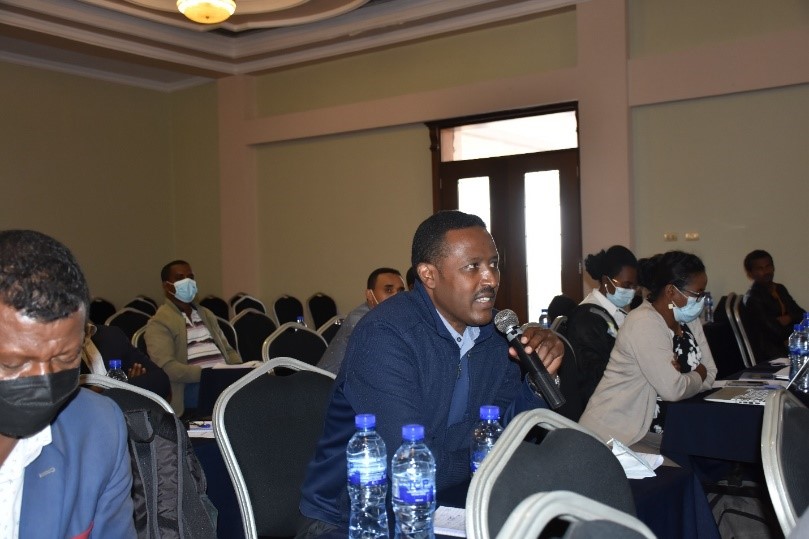
Essayas Lemma, CEO for Crop Development at the Ministry of Agriculture, echoed this sentiment during the CREW Project Survey Validation Workshop held in Adama town of Ethiopia on 3 and 4 November 2025:
“This project may not solve all climate risks, but it provides tailored advisory services that make a real difference. We must build on these results, attract private sector engagement, and ensure sustainability.”
Together, these insights point toward a unified goal: accelerating climate adaptation with urgency, innovation, and inclusivity, ensuring that every farmer, regardless of scale or location, has access to the information and tools needed to thrive in a changing climate.
About the CREW Project
The Climate-Resilient Wheat Value Chain Development (CREW) project is a five-year initiative (December 2024–May 2026) designed to enhance climate resilience, productivity, and incomes for Ethiopia’s smallholder wheat farmers.
Key focus areas include: Promotion of climate-resilient wheat varieties, improved irrigation systems, strengthened market linkages, inclusion of women and youth in value chains. Using digital tools like the Ethiopia Digital Climate Advisory Platform (EDCaP), CREW delivers tailored, real-time advice to farmers, aiming to reach 500,000 smallholder households and strengthen Ethiopia’s wheat self-sufficiency and climate resilience.
Implemented by CIMMYT, in collaboration with the Ministry of Agriculture and LERSHA-Green Agro Solutions PLC with the support of the Global Center on Adaptation (GCA).
 Innovations