Across Nepal’s western plains, a quiet yet powerful transformation is taking shape. Women farmers, long the backbone of the country’s rural agriculture, are stepping into leadership roles within Nepal’s emerging hybrid maize seed sector. What began as a modest effort to strengthen local seed production has grown into a dynamic pipeline of skilled women seed entrepreneurs, helping reduce reliance on imported seed while boosting household incomes and strengthening food security.
Maize is Nepal’s second most important cereal crop, and demand for hybrid seed continues to rise as farmers seek higher yields and climate-resilient varieties. Meeting this demand is a core priority of the National Seed Vision (2013–2025). Guided by the National Maize Research Program (NMRP) of the Nepal Agricultural Research Council (NARC) and supported by CIMMYT through the CGIAR Breeding 4 Tomorrow initiative, the western districts of Dang and Kailali have emerged as hubs of hybrid maize seed production—increasingly driven by women.
Building skills, confidence, and technical expertise
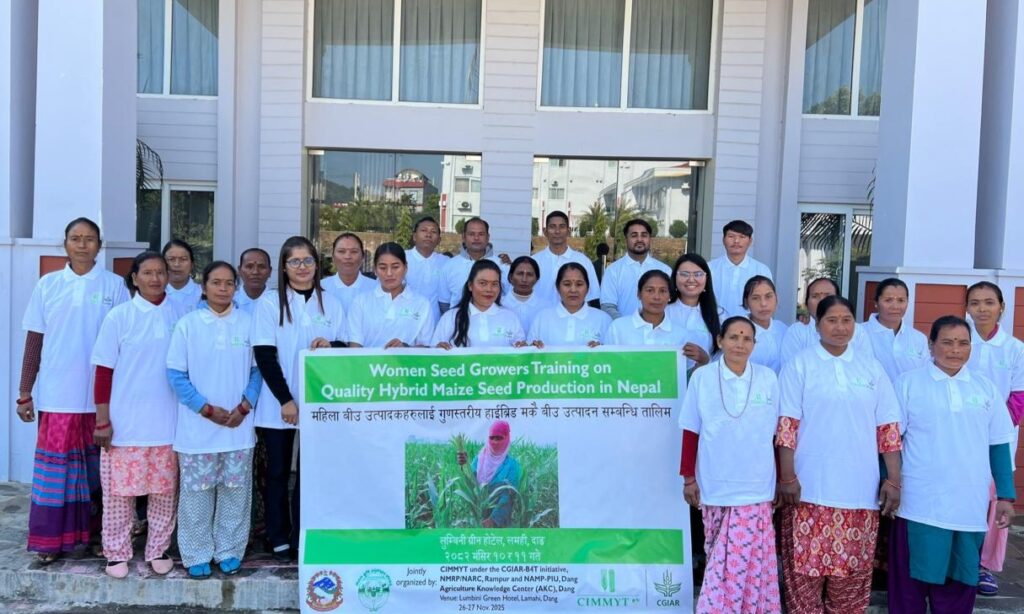
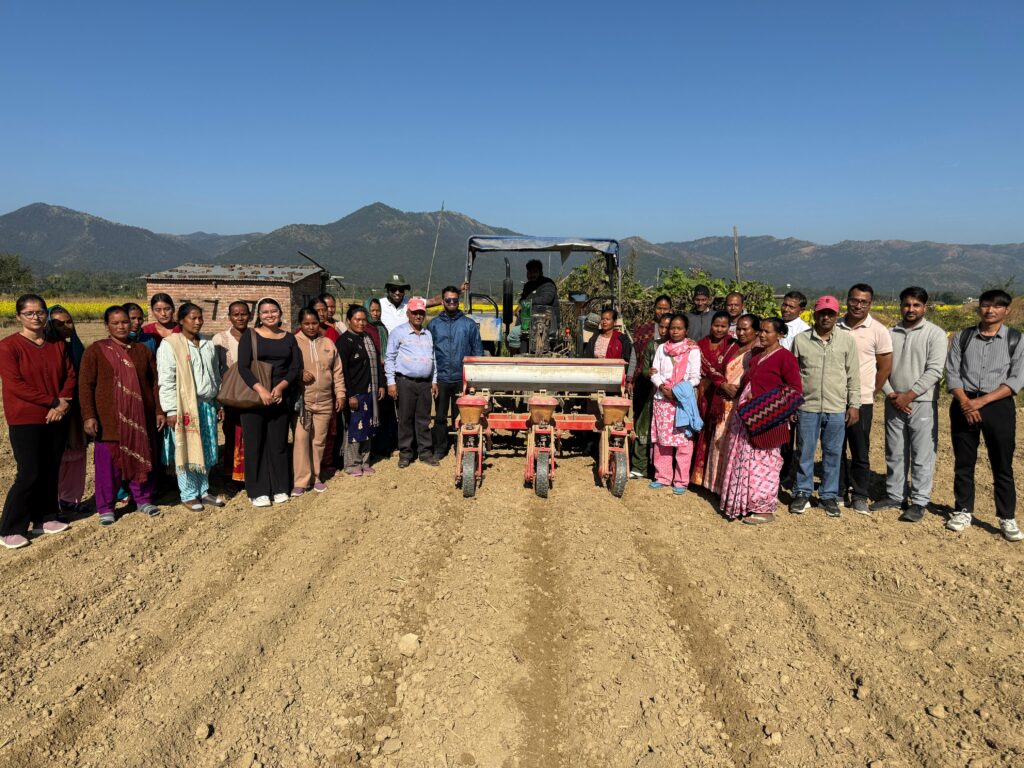
From November 26–27, 2025, more than 35 participants, most of them women and first-time seed producers, took part in specialized training on hybrid maize seed production in Nepal’s Dang district. A similar training held in late 2024 reached 105 participants, once again with women comprising the majority.
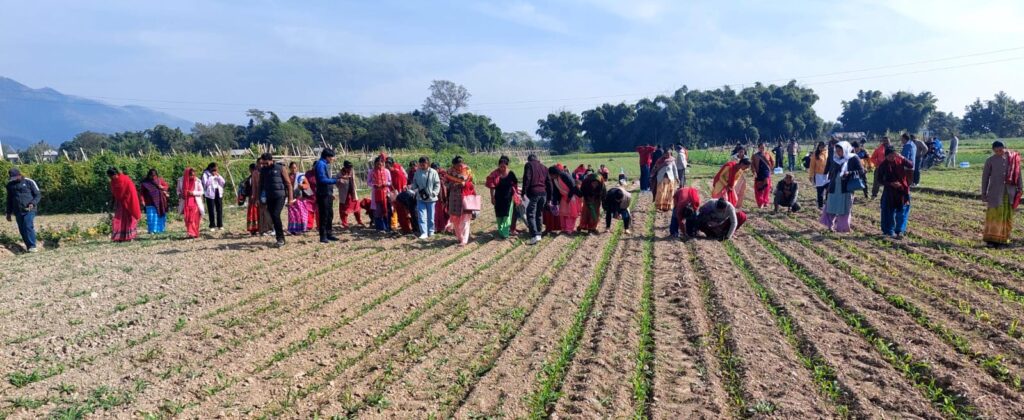
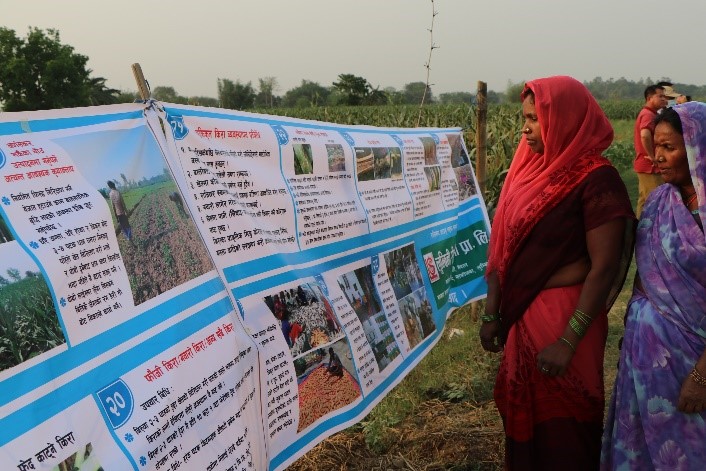
Organized by the National Maize Research Program (NMRP), National Agricultural Modernization Program (NAMP), and Agriculture Knowledge Center (AKC) teams, with support from CIMMYT, the training covered the entire hybrid seed production cycle. Sessions addressed land selection and preparation, isolation distance, planting ratios, detasseling, rouging, pest and disease management, harvesting, drying, seed storage, and marketing.
Seed companies shared technical protocols and offered buy-back guarantees, helping reduce market risks for smallholders, particularly women, who often face limited access to finance. Local governments further supported farmers through subsidies for irrigation and farm machinery, providing critical enabling scaling seed production sustainably.
“We have a district-level seed self-sufficiency program, and seed growers are eligible for subsidies for farm machinery, inputs, and seed storage materials,” said Aasha Bhandari, Agriculture Officer at AKC Dang. She encouraged new seed producers, especially women—to enroll in the local initiative and take advantage of available support.
Women seed producers emerge as local role models
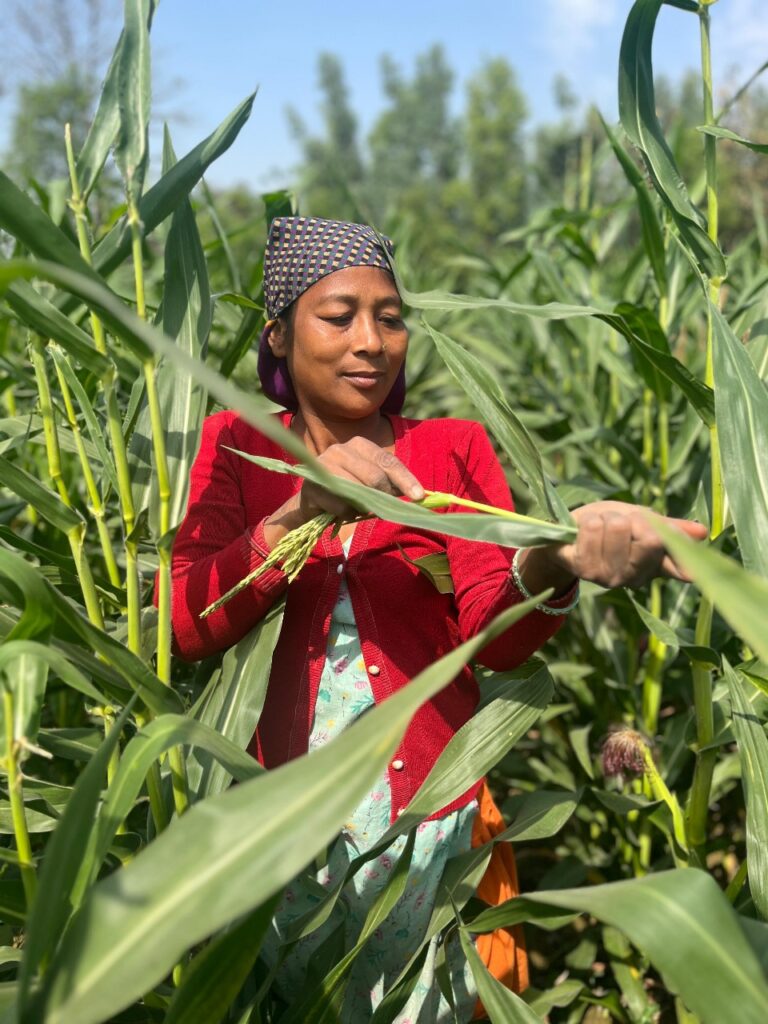
Women who began hybrid seed production in earlier seasons are now emerging as mentors and role models within their communities.
“Hybrid maize seed production changed both my income and my confidence,” said Sunpari Chaudhary from Satbariya Rural Municipality. “Now other women ask me to teach them. We feel proud that our village is becoming known for hybrid seed production.”
She noted that rice followed by hybrid maize seed production generates higher returns than traditional rice–mustard–spring maize systems, which is why she has continued seed production for six consecutive seasons.
Reliable markets, structured contracts, and clear profit margins are drawing more women into the sector. Increasingly, seed production is seen not merely as a source of income, but as a respected and skilled profession.
Strengthening Nepal’s seed sector from the ground up
Demand for quality hybrid maize seed in Nepal is rising yet imports still dominate the market. By enabling women to actively participate in seed production hubs in, the initiative is contributing to:
- Increased local seed supply and reduced import dependence
- Stronger rural economies, particularly for women and marginalized groups
- Wider adoption of locally bred hybrids adapted to Nepal’s agroecological zones
- A more resilient national seed system built on domestic production capacity
A pathway to seed self-reliance
Launched in 2019/20, the Dang hybrid maize seed production hub demonstrates how coordinated action among public institutions, private companies, and farming communities can deliver sustainable, market-driven outcomes. By 2024, the combined value of maize seed and grain produced through this initiative was estimated at USD 25 million—resources that would otherwise have been spent on imports.
Women seed producers also highlighted persistent challenges, including fall armyworm infestations, fertilizer shortages, and the need for a broader portfolio of high-performing hybrid varieties to maximize productivity. While Nepal continues to rely heavily on imported hybrid seed, the pathway to reversing this trend is becoming increasingly clear: scaling up domestic production through strong public–private partnerships.
As Puja Bhusal from Muktinath Seed Company summarized: “We need high-yielding and climate-resilient maize products from CIMMYT. With strong partnerships between public and private stakeholders, we can build a viable seed system that benefits farmers and the country as a whole. I am very grateful for CIMMYT’s practical, hands-on training and am ready to apply it within my company.”
With growing expertise, strong partnerships, and thriving seed production hubs, Nepal’s hybrid maize seed initiative is firmly taking root—and women are leading the transformation from the ground up.
 Capacity development