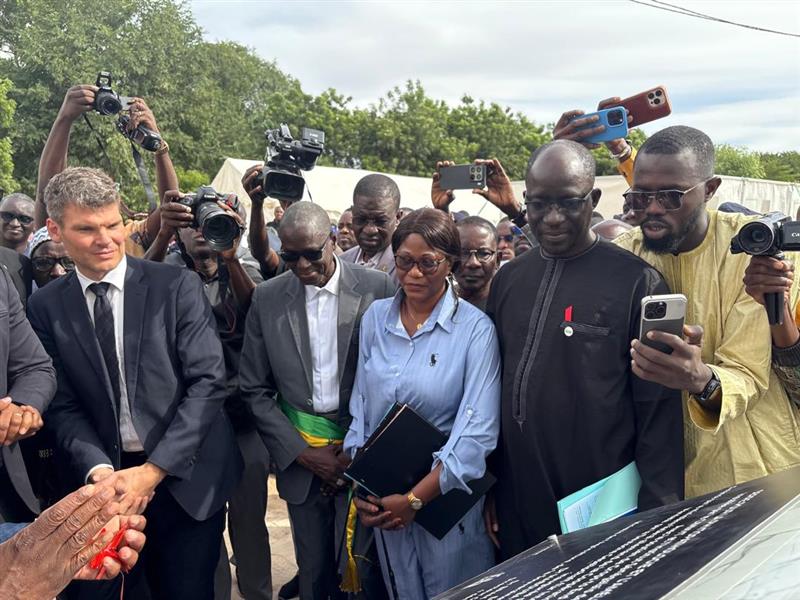
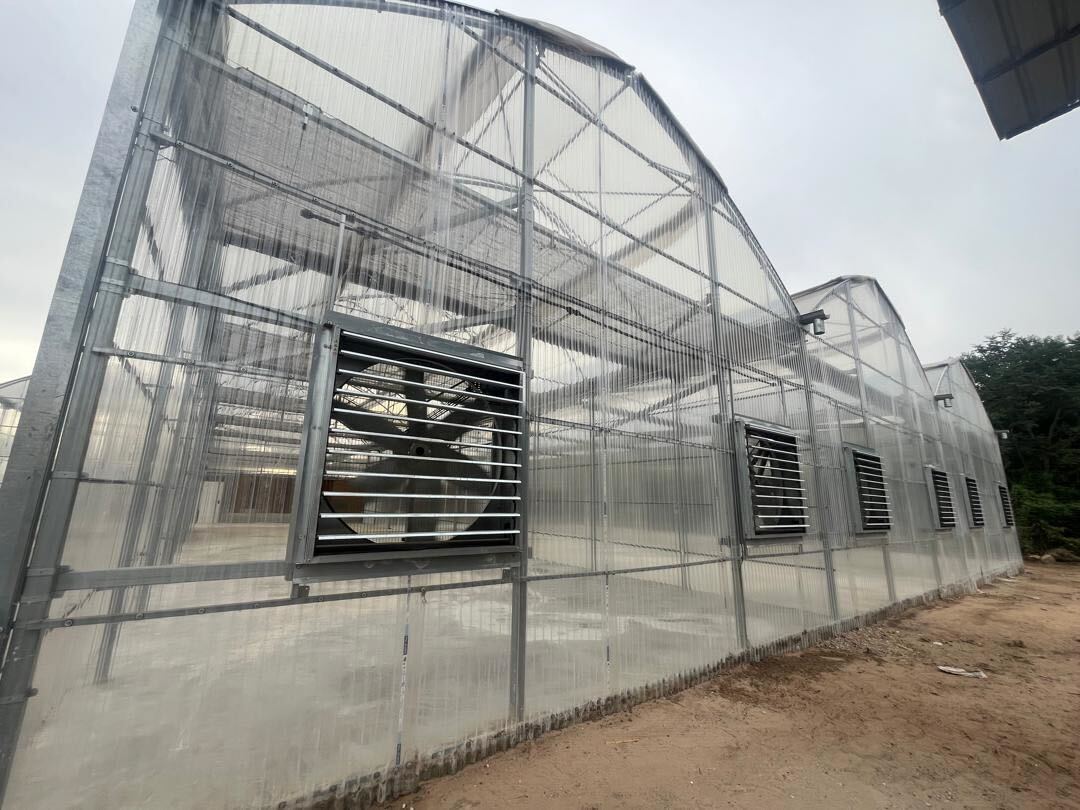
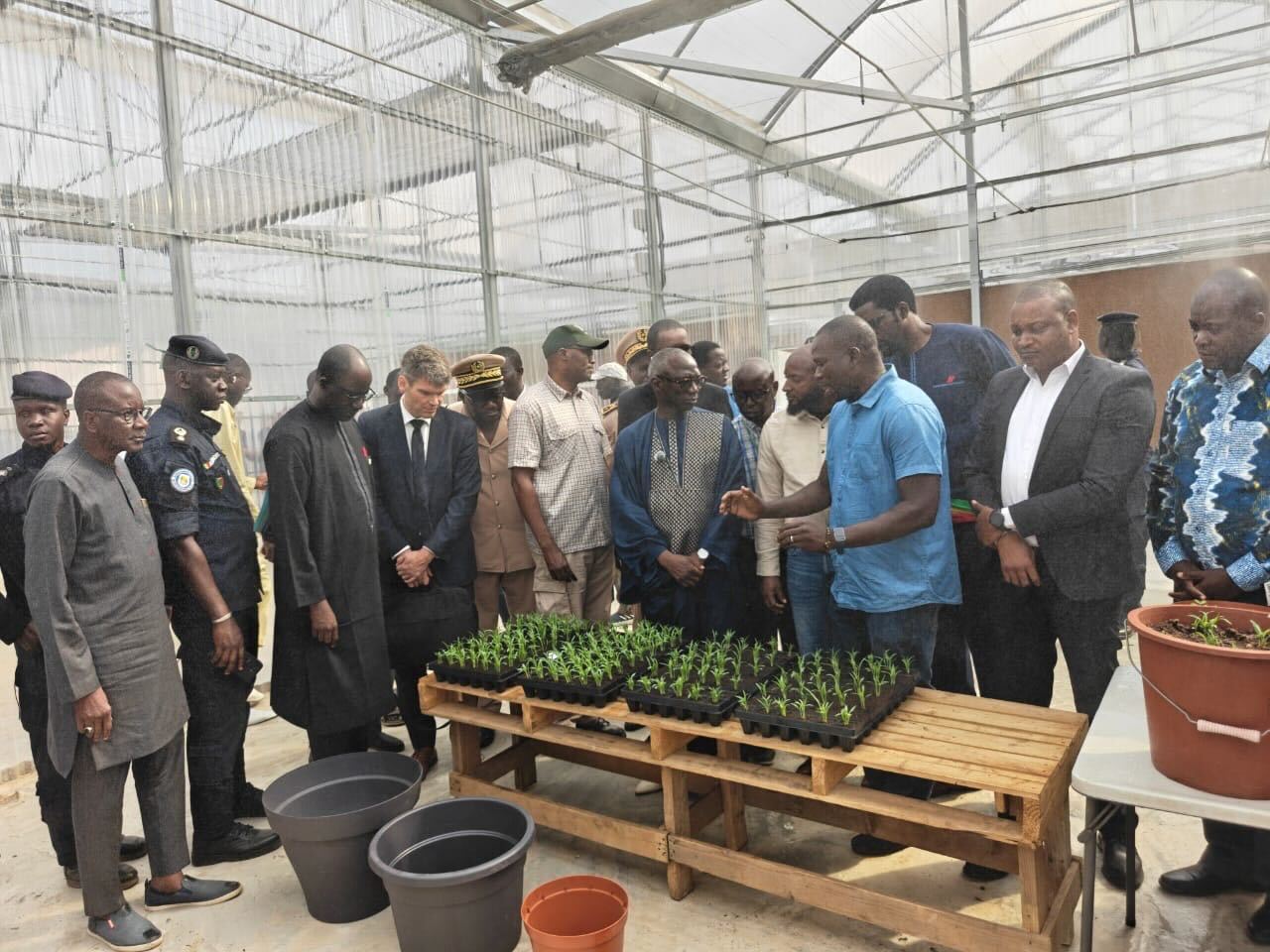
Bambey, Senegal – December 3, 2025. A major milestone for agricultural research and food security in West and Central Africa was reached today with the inauguration of a state-of-the-art greenhouse at the ISRA–CNRA research station in Bambey.
The new facility, covering 1,384 m² and comprising six independent, fully controlled compartments, will significantly accelerate crop improvement efforts for key dryland cereals and legumes across the region. Designed for phytopathology and plant breeding, the greenhouse enables up to four rapid generation cycles per year, dramatically reducing the time needed to deliver improved varieties to farmers.
The inauguration ceremony was held in the presence of His Excellency, the Minister of Agriculture, Food Sovereignty, and Livestock; regional and local authorities; representatives of ISRA, AfricaRice, GIZ, CORAF; and national and international research partners.
Baloua Nebie, CIMMYT Country Representative in Senegal, delivered remarks on behalf of CIMMYT Director General, Bram Govaerts.
“This facility represents a decisive step forward for scientific innovation, food sovereignty, and the resilience of agricultural systems in Africa,” Nebie stated. “It will enable researchers to develop solutions to crop diseases and climate-related threats with unprecedented speed and efficiency.”
A Major Milestone for West and Central Africa (WCA)
The greenhouse will support advanced research in phytopathology and plant breeding, allowing scientists to conduct specialized screening for major biotic stresses such as anthracnose, downy mildew, and rosette disease. Target crops include sorghum (15.2 million ha in WCA), pearl millet (14.4 million ha), and groundnut (8 million ha), along with cowpea, rice, maize, sesame, and fonio.
By generating precise and reliable data, the facility will accelerate the release of climate-resilient, disease-resistant varieties, improving food security and nutrition for millions of rural households. It will also serve as a training hub for students and early-career researchers, strengthening local scientific capacity in modern breeding and plant health.
The greenhouse is part of the Crops to End Hunger (CtEH) initiative, coordinated by CIMMYT and CGIAR’s Breeding for Tomorrow Science Program, and funded by the German Federal Ministry for Economic Cooperation and Development (BMZ) through GIZ. Germany invested USD 1.99 million to upgrade the Bambey station, including:
- Installation of a modern irrigation system across 50 hectares
- Acquisition of advanced breeding equipment
- Development of digital tools and mechanization for efficient breeding cycles
Strengthening Regional Scientific Capacity
The Bambey facility is central to a regional network of breeding programs across nine West and Central African countries: Mali, Burkina Faso, Nigeria, Senegal, Niger, Togo, Ghana, Chad, and Cameroon. It is expected to produce 150–200 crosses per crop annually, generating over 1,000 improved lines each year for testing across the network.
These varieties will deliver:
- Higher and more stable yields
- Improved drought and disease resilience
- Enhanced nutritional quality, helping combat anemia and supporting livestock feed
- Greater income opportunities for women and youth, especially from groundnut value chains
Nebie emphasized that a rigorous maintenance and performance-monitoring plan will ensure sustainability, supported by solar-powered pumps, drip irrigation, and soil management practices.
“The success of this greenhouse relies on shared responsibility and long-term sustainability,” Nebie noted. “Senegal is now positioned as a regional hub for crop improvement and agricultural innovation.”
About CIMMYT
CIMMYT is a cutting-edge, non-profit, international organization dedicated to solving tomorrow’s problems today. It fosters improved quantity, quality, and dependability of production systems and basic cereals such as maize, wheat, triticale, sorghum, millets, and associated crops through applied agricultural science, particularly in the Global South, through strong partnerships. This work enhances the livelihoods and resilience of millions of resource-poor farmers while advancing a more productive, inclusive, and sustainable agrifood system within planetary boundaries.
Learn more at www.cimmyt.org.
For more information:
Nahyane Bakkali, External Communications Manager
n.bakkali@cgiar.org
 Climate adaptation and mitigation