Across Nepal’s diverse landscapes — from the lowland Terai plains to the rugged mid-hills — farmers, Governments, development actors and research institutes are testing and adopting crop innovations that promise better yields, resilience, and livelihoods. Yet while many of these solutions succeed at a local level, the real challenge lies in scaling them sustainably across regions, markets, and systems.
That’s where the CGIAR Scaling for Impact Program comes in. Scaling for Impact is CGIAR’s newest and pioneering program fully dedicated to scaling land, food, and water systems innovations, in the context of climate adaptation and mitigation. The Program works to establish CGIAR as a leader in agrifood systems innovation scaling, effectively fostering partnership synergies across all of CGIAR’s Science Programs and centers to deliver scalable, inclusive, and responsible outcomes and benefits from scientific research.
In Nepal, Scaling for Impact Program is working to ensure that maize crop market systems innovations with proven benefits reach more farmers, attract new investments, influence policy, and reshape how agricultural research translates into real-world change.
From Research to Real-World Adoption
Nepal has been a hub for agricultural research and innovation for maize — from climate-smart and high yielding varieties, best management practices, mechanization, digital agro-advisories to post harvest technologies and inclusive and responsible value chains. However, scaling these innovations has often been hindered by fragmented market systems, limited investment, and context-specific challenges. Innovations cannot be usefully scaled in isolation but must be regarded as part of a collection of innovations, or an innovation package.
The Scaling for Impact Program is addressing these barriers head-on by creating structured pathways for scaling. This means:
- Supporting evidence-based scaling strategies that draw on years of CGIAR (CIMMYT and IWMI) research.
- Strengthening partnerships between research institutions, government bodies, private companies, and farmer organizations.
- Building capacity among national partners to design, test, and sustain scaling approaches.
As a result, innovations are no longer viewed as isolated pilots but as components of wider agricultural and market systems transformation — linked to market access, policy alignment, and inclusive development.
Scaling in Action
In Nepal, Scaling for Impact Program is supporting several initiatives in maize-based cropping systems that demonstrate what scaling looks like in practice:
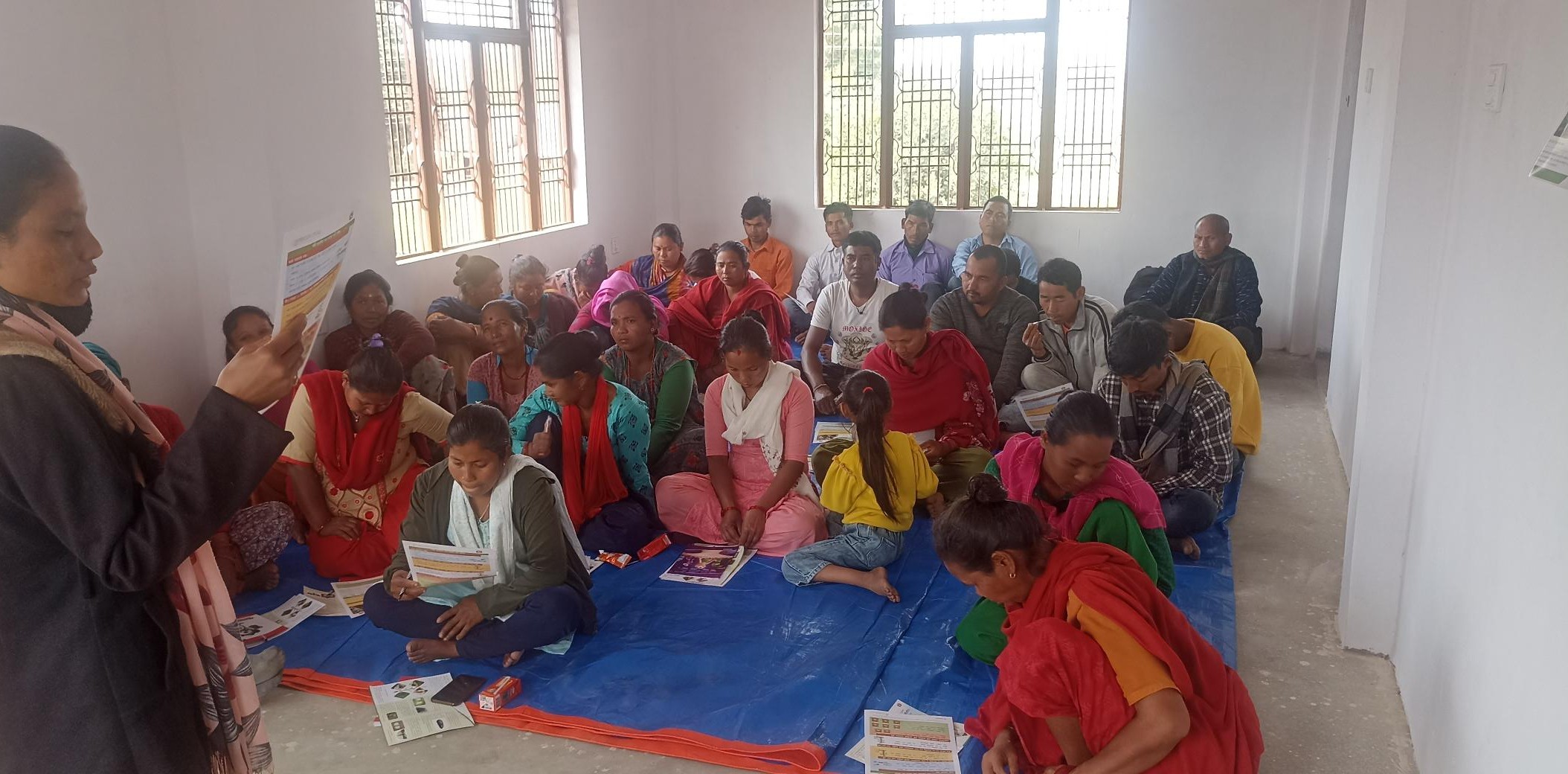
- Climate-resilient varieties developed through CIMMYT research and those registered by international companies are being deployed in collaboration with the National Agricultural Research Council (NARC), seed companies, agro-dealers improving productivity and climate adaptation for smallholders. More than 41 MT of improved seeds were made available by market actors and Government agencies to 8500 farmers which were planted in 2000 ha in 2025.
- Best Management Practices for planting, irrigation, fertilizer application, and weeding are being mainstreamed through extension agencies, farmers, cooperatives and digital advisories. In 2025, these technologies are being implemented in around 2,000 ha covering Nepal’s Western terai, with a potential to reach 40,000 ha by 2030. About 70% of farmers were using hybrid seeds and 87% practicing line planting for better efficiency. Best management practices, such as targeted urea application and crop pooling, led to a 15% reduction in production costs and improved climate resilience. From 2021 to 2025, spring maize adoption in Western Terai soared by 700%, while average crop yields (rice, maize, legumes, vegetables) rose 21–85% over 2017 figures. Additionally, the International Water Management Institute (IWMI) and The Department of Water Resources and Irrigation (DWRI) developed irrigation monitoring systems (canal flow, soil moisture content through censors) in the Babai irrigation area covering 36,000ha, enabling data-driven water management and supporting crop growth at critical stages.
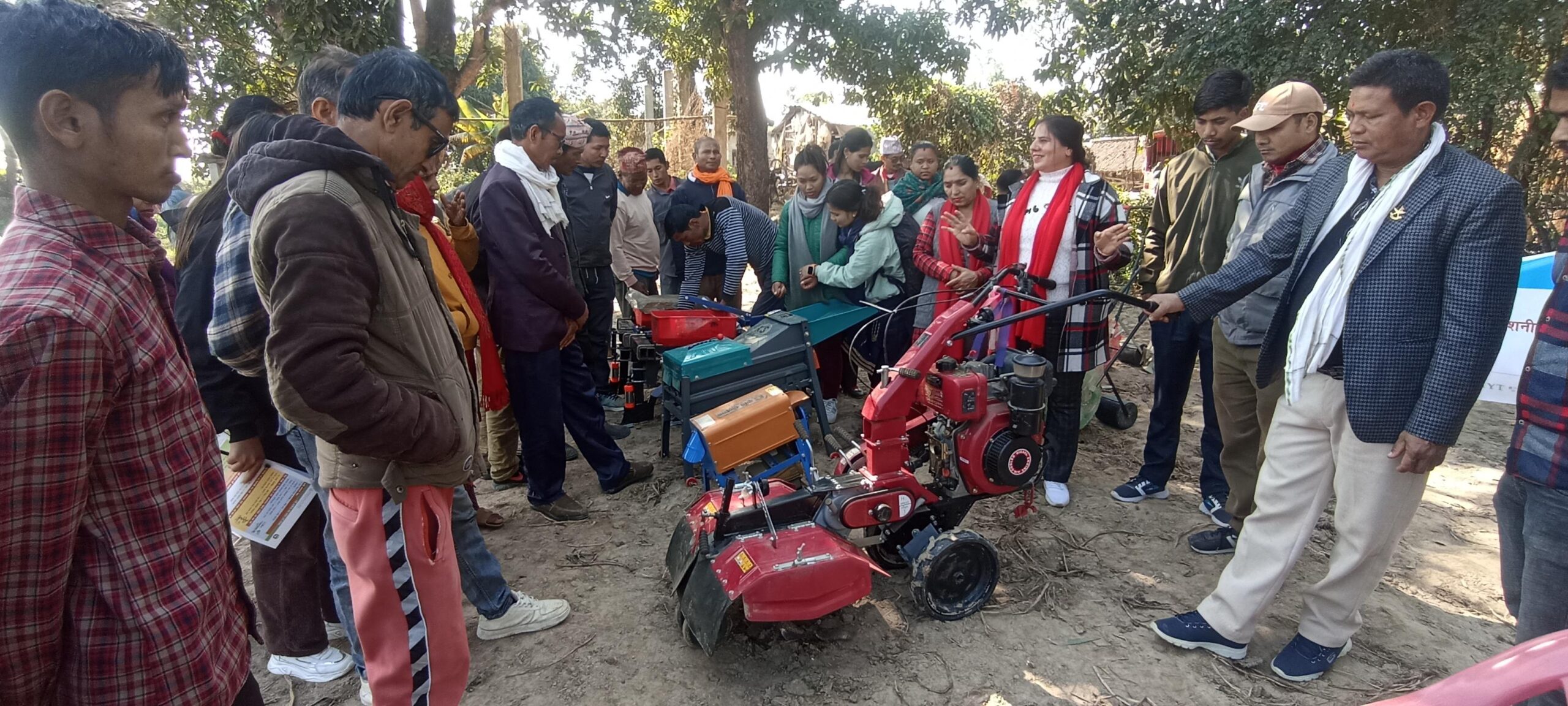
- Farm appropriate mechanization for land preparation, planting, shelling and drying is being increasingly adopted thus reducing farmers’ cost of production and improving maize quality. S4I is working with 75 custom hiring centers and the introduction of seed drills cut sowing costs from US $53 to $26 per hectare. Machine planting was used by 29% of farmers in the pilot sites which is gradually increasing.
- Improved farmer market linkages facilitate local level aggregation, contracts with buyers and feed mills, thereby improving farmers’ prices, incomes and market assurance. Annual maize sales value in participating farmer cooperatives reached US $3.3 million, which is an 850% increase since 2021. In 2025, about 1100 MT maize was sold directly to feed mills showing improvement in Nepal’s maize grain quality, trust and emerging market linkages.
- Diversifying markets with innovation platforms by convening public, private and community actors in innovation platforms and linking agribusinesses dealing with livestock, local feed processing and food processing are rejuvenating local maize markets and increasing resilience.
- Increasing private sector investment in maize value chain: While building confidence towards the quality of locally produced maize and building trust with maize grower cooperatives and public stakeholders, private actors (agrodealers, aggregators, food mills and feed mills) have increased investment in maize value chain. It was estimated that these actors made about USD 3 million in investments in storage, agriculture machinery, irrigation infrastructure and feed and food processing since 2021 in the maize commercial model MCM.
Each of these examples reflects the Scaling for Impact Program’s guiding principle: scaling is not about copying and pasting a solution — it’s about adapting, integrating, and sustaining what works within Nepal’s local contexts.
The Power of Partnership
CGIAR’s Scaling for Impact Program approach in Nepal emphasizes co-ownership. Scaling is only successful when the right actors move together — researchers generating evidence, government providing an enabling environment, private sector investing in delivery models and procurement, and farmers shaping and using the science backed recommendations. Actors in the innovation system are linked with the networks and institutional and policy conditions that enable the testing, development, and use of good practices. Through collaboration with ministries, provincial governments, NGOs, and private partners, the Scaling for Impact Program ensures that scaling efforts are both scientifically sound, environmentally sustainable and socially grounded.
This partnership model helps to:
- Embed scaling strategies within national plans and policies. Nepal’s Ministry of Agriculture and Livestock Development (MoALD) funded the scaling of maize innovations from Western to Eastern Terai in 2025
- Strengthen local institutions’ capacity to lead scaling beyond project lifespans. A few rural municipalities developed five years’ strategic plans for MCM scaling, and some of them started implementing minimum support price policy in maize and other crops. Similarly, 40 cooperatives continued their service bundling (seed, fertilizer, pesticide, credit, training and markets) to their members. CIMMYT and IWMI supported rural municipalities and irrigation departments in planning and implementing maize innovations in their on-going programs through strategic meetings, training, sharing knowledge products, and fostering their linkage with private-sector service providers and cooperatives.
- Foster innovation ecosystems that encourage learning, adaptation, and investment.
Scaling for Transformation
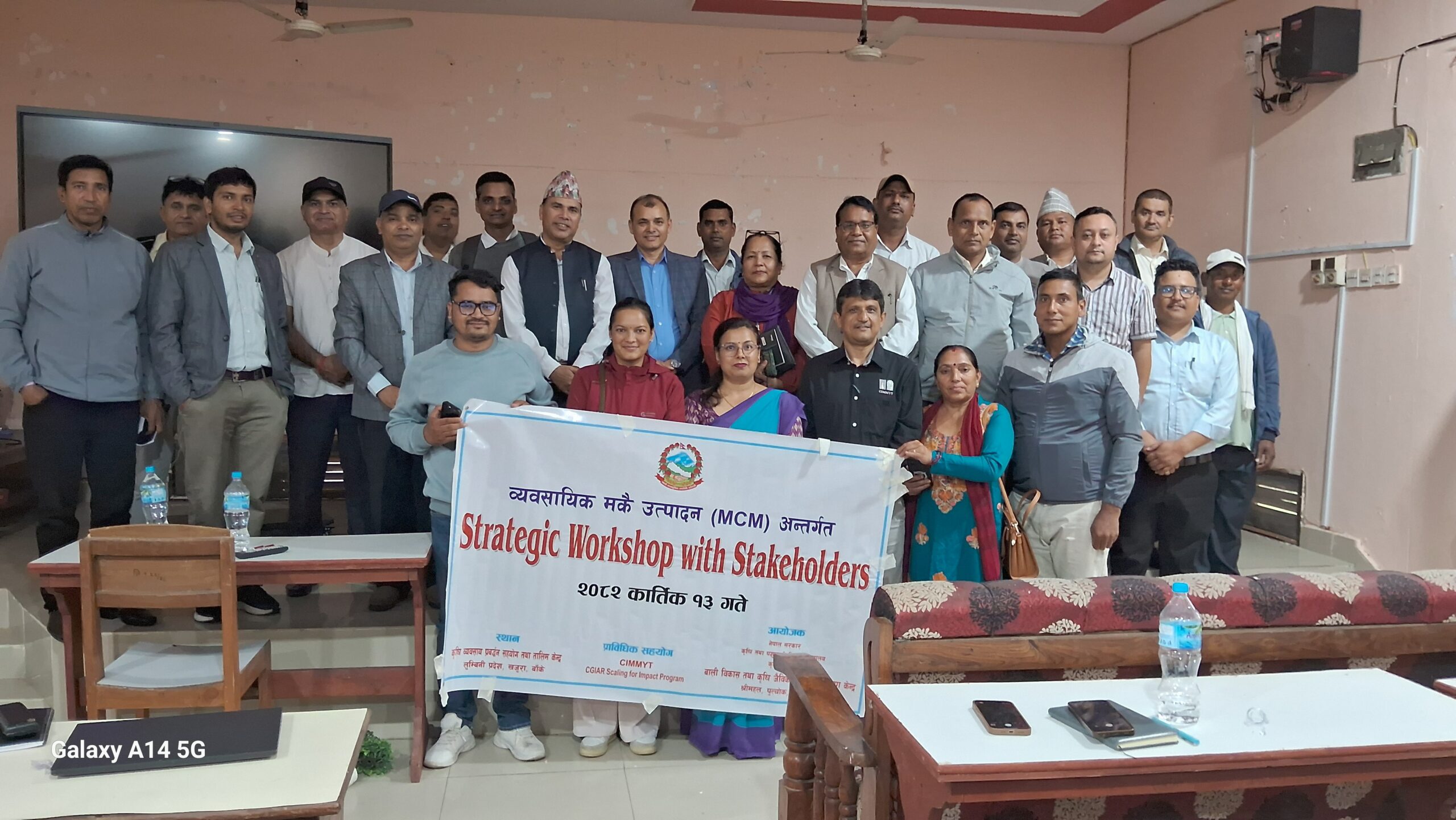
Ultimately, the goal of CGIAR’s Scaling for Impact program in Nepal is not only to multiply adoption numbers — but to catalyze systemic change.
By aligning maize research for development actions with the country’s agricultural priorities and creating a shared vision among partners, S4I is helping Nepal build a more productive, inclusive, and climate-resilient maize food system.
Scaling innovation is no longer a final step in the research process — it’s a continuous journey of learning, adaptation, and collaboration. And in Nepal, that journey is already showing what’s possible when science meets partnership for impact.
 Innovations